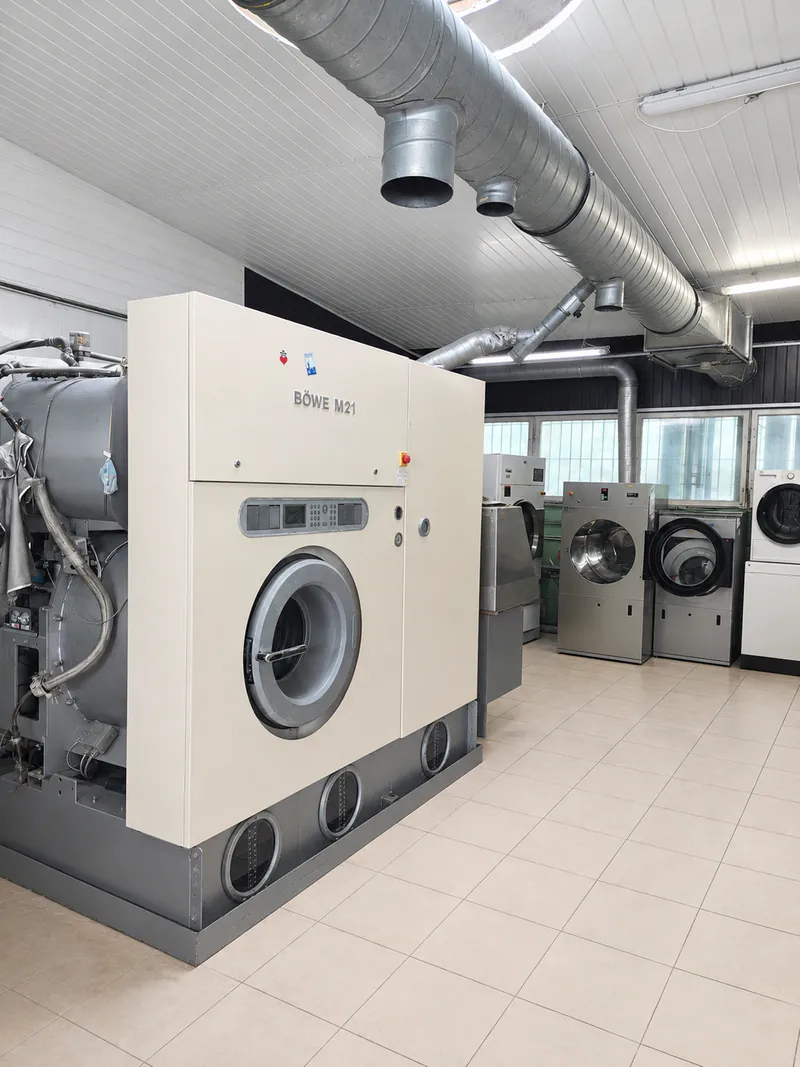
In-house textile cleaning in Berlin: who assesses your garment?
A drop-off point can accept a garment. But who listens when a stain is old, the lining is delicate or a coat is a family heirloom? Before treatment, the right questions, a skilled decision and an honest account of risks and timing matter.
Every trade deserves respect. Your garment deserves the right trade.
A tailor is not a bad tailor because they do not treat stains. A pilot is not uninformed because they cannot clean a coat. These professions require different skills. That is why a cleaning decision should not be based on a shop sign or the mere acceptance of an item.
You would not take alterations to the greengrocer. Do not take cleaning to a tailor who only acts as a drop-off point. A sign in the window does not turn a forwarding counter into a cleaning specialist.
This is not a judgement on people or professions. It is a call for direct, accountable specialist care – whichever cleaning business you eventually choose.
Drop-off point or in-house cleaner: what is the difference?
Drop-off point
Accepting and forwarding
A drop-off point passes your garment to another business. This can work if special details are recognised, passed on in full and questions are resolved before treatment. Ask how that happens before leaving your garment.
In-house specialist
Assessing and deciding responsibly
When intake and treatment are closely connected, information about stains, fabric and condition can directly influence the process. The sign on the door matters less than whether someone answers questions, explains risks and gives a realistic collection date.
A 'full cleaning' sign alone does not prove that the work is done there or that your garment receives a professional assessment. Ask.
At any cleaner in Berlin
Five questions before leaving an important garment
Will my garment be treated here?If not, where and by whom?
Who assesses the stain, fabric and care label?Can that person ask questions before treatment begins?
What information do you need from me?The cause and age of a stain, previous treatments and existing damage can matter.
What are the risks and limits?A serious answer does not promise that every stain will disappear.
When will it really be ready?A special case may need extra steps rather than a standard collection date.
How LeoClean works
A quick intake for standard items. More time for exceptional ones.
01
Standard items
Our trained counter staff ask whether you have any particular concern about the item. Without a special issue, drop-off stays straightforward.
02
Unusual or higher-risk items
We ask about the care label, fabric, stain cause and age, previous treatments, existing damage, lining and trims. Where needed, we offer an assessment by our technical specialist.
03
Specialist consultation
If the specialist is present, they can inspect the item straight away. Otherwise, you can leave contact details and we will get back to you after the item has been examined, before a special treatment path is agreed.
04
Risk and timing
We explain identifiable risks before the relevant step. If you agree, the explanation and consent are noted on the order receipt. The work required determines the collection date.
An assessment does not guarantee complete stain removal or freedom from damage. It gives you an informed basis for your decision.
Why 'collect it tomorrow' is not always a professional answer
A valuable suit
The care label does not say whether a suit cost €200 or €1,500. A carefully constructed suit still calls for attention to its interlining, shape, fabric combinations and existing marks before a date is promised.
A distinctive designer shirt
Elaborate, irregular pleats and trims are not a routine shirt service. Its construction may require different treatment and finishing. That should be discussed at intake.
A vintage coat
An older garment may have pre-existing damage and great sentimental value. Separate processing or several steps may be needed, changing the turnaround time. We explain what can be foreseen after assessment.
An anonymised case from our work
A leather coat, around 50 to 60 years old
The coat was a keepsake from the customer's late mother. It reached us through an external drop-off point with only 'stains not guaranteed' on the accompanying note. After two cautious treatments, the stains remained. In a direct conversation we then learned that yoghurt had spilled on the coat and how long the marks had been there.
That information changed the assessment. We discussed a further step tailored to the type of stain, the possibility of colour lightening and several extra days of work. The customer agreed after hearing those risks. The subsequent treatment removed the stains; an additional application was used to address possible lightening. She collected the cleaned coat from our store.
The result followed from precise information, specialist assessment and informed consent – not a blanket promise. This single outcome is no guarantee for other leather garments or stains.
In-house treatment, not a drop-off-only model
LeoClean offers textile cleaning as well as leather, carpet, curtain, laundry and ozone services in its own branches. For an unusual item, we do not choose a treatment through a blanket promise: we assess it, explain relevant risks and agree the next step with you.
Choose us or another cleaner – what matters is knowing who assesses your garment, where it is treated and who can answer your questions before you leave it.
No. What matters is whether staff recognise special issues, pass on information reliably and make a specialist consultation possible before risky treatment. Ask where the work is done and who decides on the process.
Does a specialist inspect every LeoClean item immediately?
No. Our trained staff accept standard items without needless delay. For unusual or higher-risk garments they offer an assessment by our technical specialist, immediately if present or after the item has been examined and we have contacted you.
Why can a special suit or vintage coat take longer?
Its fabric, age, construction, stains and existing damage may require separate or additional steps. We therefore do not promise a standard collection date for such items before the treatment path is clear.
Does in-house cleaning guarantee removal of every stain?
No. Even a professional assessment cannot guarantee the outcome. It helps us discuss options, limits and risks openly before a decision is made.
What should I tell the cleaner about a stain?
If you know, explain what caused it, how old it is and whether water, heat, soap or another product has already been used. That information can affect the choice and assessment of the next step.